Free Seats, Cold Hands, Fast Boats: The Winter Head Race Worth Rugging Up For
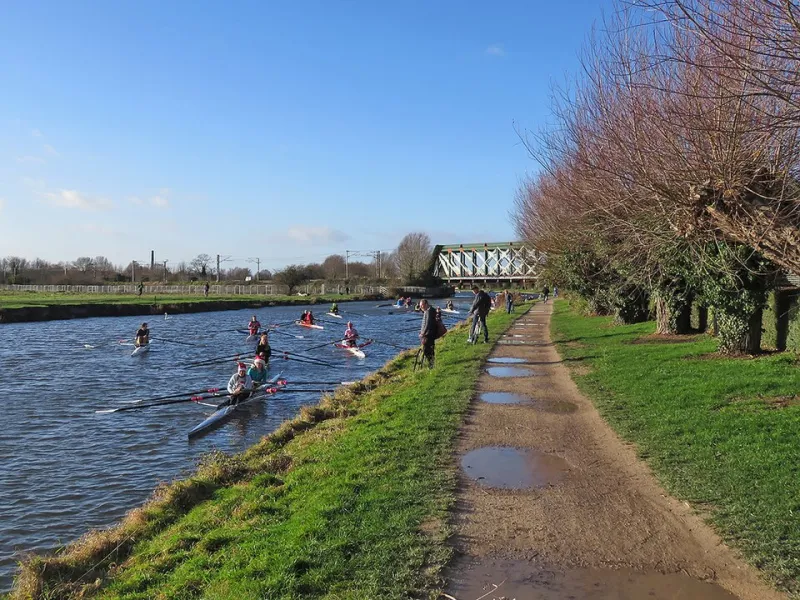
Photo: John Sutton , CC BY-SA 2.0, via Wikimedia Commons
November in Britain has a particular smell: wet leaves, diesel from a club minibus and the faint whiff of bacon drifting out of a rowing club kitchen. Follow that smell to a riverbank on a Saturday morning and you will find one of the country’s most underrated free sporting occasions — a winter head race.
There is no ticket office, no turnstile and no need to book a seat. The grandstand is the towpath. The action arrives in bursts: a cox’s voice cutting through the cold, eight blades biting the water, a clatter of oars as a crew pushes off, then a long, expectant wait for the next boat. It is grassroots sport at its most exposed, and it costs nothing to watch.
What actually happens at a head race?
Head races are time trials, not side-by-side sprints. Crews set off one at a time, usually at short intervals, and race the clock over a set course. You will see eights, fours, quads and singles, from junior squads and university second boats to masters crews who have been doing this since before the cox was born. The fastest time in each category wins. The cox steers, motivates and occasionally apologises.
Because boats start sequentially, the towpath becomes a moving viewing platform. Walk a few hundred metres and you can watch the start, the middle grind and the finish without paying a penny. The course might be 2km, 4km or longer depending on the event, the river and the weather. Some races are small club affairs with a few dozen crews; others fill a whole morning and part of the afternoon.
Why the bank beats a grandstand
A head race gives you the thing most big sports cannot: proximity. You are close enough to hear the cox call for a push, see the strain in a rower’s shoulders and watch a blade catch a lump of river water at exactly the wrong moment. You can follow one crew for a few minutes, then pick another. You can stand near the finish and watch times being shouted up, or loiter by the boat trailers where clubs are rigging, taping and arguing about seat order.
Then there is the clubhouse. Not every event has a full kitchen, but many open their doors to spectators for tea, coffee, cake and the all-important bacon roll. Bring cash, a reusable cup and a willingness to queue behind a junior squad. It is the kind of sporting day out where the catering is part of the experience rather than a £12 afterthought.
How to find a head race near you
Start with British Rowing’s event calendar, then check the websites and social feeds of local rowing clubs. Events usually publish a start list, a course map and spectator notes in the days before racing. Look for names like Head of the Trent, Wear Head, Head of the Nene, Bedford Head, Quintin Head, Head of the River Fours and the Scullers Head. Exact dates vary by river and conditions, and the winter calendar in 2026 will run from late autumn into early spring.
You do not need to live beside the Thames. Head races take place on rivers and waterways across the UK, from the Tyne and Wear to the Trent, Ouse, Nene, Cam, Clyde and Severn. Some are long-established city events; others are low-key club time trials with a gazebo and a clipboard. Both are worth a look. Search for rowing clubs within an hour of you and see what appears in their winter fixtures.
Listen for the cox
The coxswain is the free entertainment. They are part coach, part satnav and part chief motivator, often with a voice that carries across half a mile of cold air. You will hear calls for length, rhythm and power, warnings about buoys, and the occasional sharp instruction to a crew that has drifted off line. When a boat passes, the sound is a messy, wonderful clatter of oars in gates and water rushing past the hull.
Marshals in high-vis jackets keep the whole thing moving. They are volunteers, and they deserve a bit of patience. Stand behind the marked areas, keep dogs close and do not step onto the course. If you are cycling the towpath, slow down, ring your bell early and give crews room. This is a working riverbank, not a closed road.
Dress for the wait
Winter head races are not a sprint for spectators. You will stand around, then move quickly, then stand around again. Layers, waterproof trousers and a thermos are your friends. Check the weather and the river conditions before you travel; high water or strong wind can mean cancellations at short notice. Parking near clubhouses is often limited, so use public transport or arrive early.
The grassroots bit that matters
Head races are a reminder that rowing is not just a posh postcard. Clubs rely on volunteers, parents, coaches and former rowers who turn up to marshal, make tea and tow trailers. Many run learn-to-row courses and juniors programmes, and events often include adaptive and beginner-friendly categories. Watching is free; joining in usually is not, but the clubhouse noticeboard is the place to ask.
So next time a cold Saturday needs a plan, find a river, follow the trailer traffic and take a walk along the towpath. You will get fast boats, cold hands, loud coxing and a bacon roll. No ticket required.