Lane Four, Loudest Cheer: The Free Poolside Winter Fix Britain Keeps Overlooking
As November settles into its damp, dark groove, the British sports fan faces the usual winter maths. Big-match tickets? Eye-watering. Train fares? Grim. A pint at the ground? You’ll need a second mortgage and a loyalty card. But there is another option, and it smells faintly of chlorine. It is the local swimming gala: free to watch, warm to sit in, and loud enough to remind you that sport does not need a corporate hospitality suite to make a racket.
This is not the Olympics. It is better than that in one very specific way: nobody is checking your ticket because there usually isn’t one. In 2026, as elite sport continues to price plenty of fans out of the room, grassroots swimming clubs are quietly opening their poolside doors. You turn up, find a spot in the spectators’ area, and watch ordinary people chase personal bests with extraordinary commitment.
The warmest ticket in town is no ticket at all
Most amateur galas — club championships, development meets, friendly league fixtures — do not charge spectators. Some may ask for a small programme donation or a raffle ticket, but the barrier to entry is largely a pair of shoes and the willingness to clap for children you have never met. Try doing that at a Premier League ground.
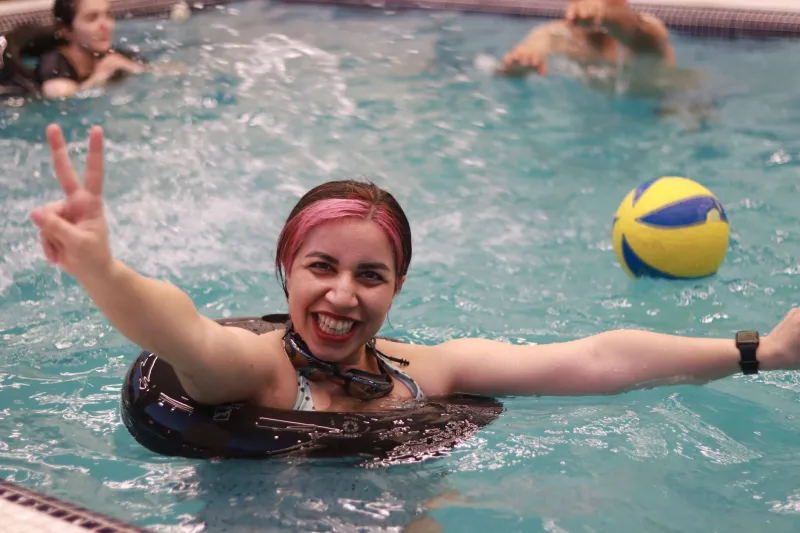
The setting helps. A leisure centre pool hall is one of the few places in Britain where you can defrost on a Saturday morning without spending a tenner on coffee. The air is humid, the seating is plastic, and the windows are steamed up before the first race. It is not glamorous. It is, however, genuinely welcoming. Grandparents, club volunteers, nervous parents and swimmers waiting for their next heat all share the same slightly over-warm space. The dress code is hoodies and optimism.
What actually happens on poolside
A gala is not one race. It is a rolling programme of heats, age groups and strokes, with the occasional relay thrown in to send the noise levels through the roof. You might see an eight-year-old swimming their first 25 metres and a seventy-something master’s swimmer gliding through the same session with considerably less splash. You will see club caps, goggles that are too big, and timekeepers clicking stopwatches with the seriousness of air traffic controllers.
The drama is in the detail. A swimmer touches the wall, looks up at the scoreboard, and realises they have knocked two seconds off their personal best. A relay team is disqualified for a changeover that was a fraction too early. A marshal crouches down to reassure a tearful swimmer that the disqualification is not the end of the world. The announcer tries to keep pace with the results. Somewhere near the door, a tea hatch is doing a steady trade in steaming mugs and bacon rolls.
Relays are the loudest. Four swimmers, one wall, and a gallery that suddenly remembers it has lungs. You do not need to know the clubs to get swept along. You just need to be the sort of person who enjoys a comeback, a close finish and the particular joy of a team cheering so hard that the pool water practically ripples.
How to find a gala near you
Start local. Club websites and social media pages usually list their winter fixtures, and plenty of galas are advertised on leisure centre noticeboards. Swim England, Scottish Swimming, Swim Wales and Swim Ulster all have club and event networks, while county associations often point towards development meets and league fixtures. If in doubt, ring the leisure centre reception. It is still the most reliable search engine in Britain.
Check before you travel. Not every event welcomes spectators in the same way, and some larger competitions may have specific arrangements. But the grassroots circuit is generally open, especially at club championships and junior development galas. Arrive early enough to find a seat, bring cash for the raffle, and leave the car at home if you can. Pool car parks on gala mornings have a special talent for making you question your life choices.
Poolside etiquette for first-timers
Sit in the designated spectator area and keep aisles and fire exits clear. Swimmers need space to move between the marshalling area and the blocks, and officials need to do their jobs without stepping over your coat. Keep flash photography off during races. Cheer every lane, not just the one containing your favourite swimmer. And resist the urge to coach from the balcony; the club coach has enough to worry about without a helpful stranger shouting about breathing patterns.
Respect the officials, too. Timekeepers and judges are volunteers, and they are often the reason the whole thing runs at all. If a disqualification goes against your swimmer, take a breath. There is usually a proper explanation, and a queue of people who have given up their Sunday to make the gala happen. Applause for effort goes a long way. So does saying thank you on the way out.
Why the cheers sound different
There is no corporate hush at a grassroots gala. Nobody is waiting for a sponsor’s message or a big-screen prompt. The noise comes from the gallery because the gallery is full of people who know the swimmers, or who have been persuaded to spend a Saturday morning in a warm pool hall and have decided to make the best of it. The result is a cheer that feels less like entertainment and more like community.
It is also free in the best sense: not just free of charge, but free of the feeling that you are being sold something. You can turn up, watch a few heats, have a cup of tea, and leave knowing a little more about the people who swim in your town. That is a rare thing in modern sport, and it is sitting in a council leisure centre near you this winter.
So before you write off the season as a long wait for spring, check the local pool timetable. Lane four might not produce an Olympian. It will almost certainly produce a roar. Take a book for the gaps between races, but don’t be surprised if you never open it.