The Glass Back Wall: Why a Free Squash League Night Is Winter’s Smartest Spectator Seat
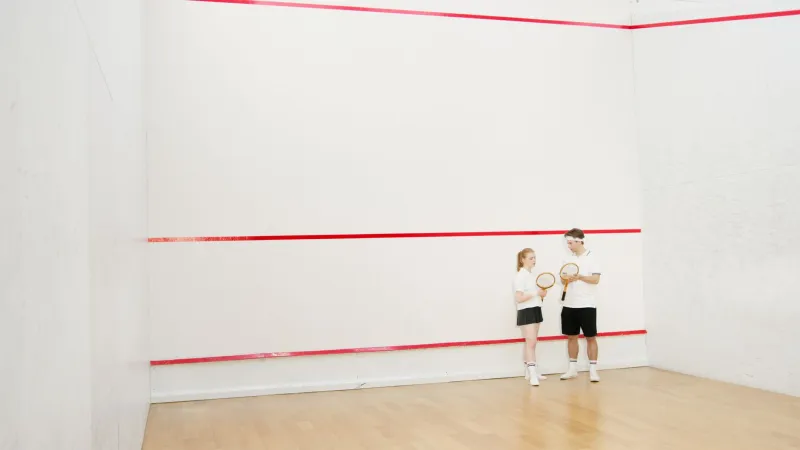
There is a particular smell to a leisure centre in winter. Chlorine, floor polish, slightly overworked radiators and the faint whiff of a vending machine doing its best. Follow that smell past reception, up a staircase and on to a balcony, and you will find one of Britain’s most underrated free sporting nights out: grassroots squash league night.
No ticket office. No big screen. No half-and-half scarves. Just two players, four walls, a glass back wall and a small knot of clubmates watching a rally that somehow lasts longer than most midfield passing sequences in the Premier League. In 2026, when so much sport is packaged, priced and piped through a subscription, the local squash box is a reminder that top-level drama can happen in a council building on a wet Tuesday.
The commute is a corridor and a balcony
Squash has an image problem, and the image is usually a 1980s businessman in tiny shorts, sweating near a potted plant. Ignore that. The modern club night is a mixed, noisy, remarkably friendly affair. Juniors waiting for their turn, veterans with knees taped like Victorian plumbing, students who have just discovered the joy of a good length, and parents who popped in for a swim and stayed for the fifth game.
The spectator experience is simple. You stand on a balcony or behind a glass wall, ideally with a flask, and watch. Most club league matches and internal box leagues do not charge admission. You are a guest in someone’s sporting front room. That is the charm. You are close enough to hear the marker call the score, close enough to see the concentration, and close enough to feel the whole thing swing on a single loose ball.
What actually happens on league night
Grassroots squash usually means team matches or box leagues. A team night might feature several courts running at once, with players of wildly different standards doing battle for the same club. A box league is more intimate: a small group of players arranged by ability, all trying to play each other over a few weeks. Either way, the format is built for watching.
Expect short, sharp rallies. Expect lunges that look medically inadvisable. Expect a player to chase a drop shot into the front corner, scrape it back, then get beaten by a boast. Expect the words let and stroke to be used with great seriousness, followed by a shrug and a replayed point. Expect the score to move quickly, because modern scoring means every rally matters.
The best matches are rarely the tidiest. They are the ones where two clubmates know each other’s games inside out. One keeps hitting length. The other keeps trying to volley. A third player leans on the balcony rail and says, quietly, that he should have gone short two shots ago. Nobody is being paid. Nobody is going viral. It is still desperately important to the people inside the glass box.
The etiquette of being a squash spectator
You do not need to know the rules to enjoy it, but a little awareness helps. Applause is welcome after a good rally, for both players. Save the loud commentary for between points. Do not shout during a rally, flash a phone camera at the glass, or stand directly behind the back wall when someone is mid-lunge. If there is a balcony, keep the walkway clear. If there is a cafe, buy a tea. Free sport still costs somebody something, and a club that feels supported is a club that keeps its doors open.
It is also fine to ask questions. Grassroots sport runs on people who are happy to explain why the marker called a let, why the player switched sides, or why the chap in the corner is wearing three jumpers. The squash crowd is not precious about its secrets. It is mostly delighted that somebody has come to watch.
How to find a night near you
Start with your local leisure centre or sports club. Check the noticeboard, the timetable and the club website. Look for box leagues, team fixtures, club nights or social squash. Ask at reception whether spectators are welcome. In most places, they are. If you have a friend who plays, even better: they will know exactly which night has the closest matches and the best post-match chips.
You can also look out for county league fixtures, university club nights and workplace leagues. These are the unglamorous fixtures that keep the sport alive, and they are usually glad of an extra pair of hands on the balcony. Take a layer. Leisure centre balconies are not known for their tropical climate. Take a flask. Take a friend who thinks squash is just wall tennis and watch them change their mind by game three.
Why it deserves a crowd
The case for squash league night is not nostalgia. It is the sport itself. The rallies are quick, the skill is obvious and the atmosphere is close enough to touch. You can see the effort on faces, hear the squeak of trainers and feel the sudden silence before a big point. It is sport stripped back to its essentials, played by people who do it for the love of it.
It is also a genuinely free winter night out, which matters. Not free as in a trial offer, or free as in a sponsored gimmick, but free as in turn up, watch and belong for an hour or two. The glass back wall does not care about your fantasy football team or your streaming subscriptions. It just gives you a closer view of a brilliant, awkward, wholehearted game.
So next time the rain is horizontal and the sofa is calling, try the leisure centre instead. Follow the corridor, climb the stairs and take your place on the balcony. The squash crowd might not have a drum, a mascot or a song, but they have a glass box, a close league and a welcome that is warmer than the radiators.