Gaffer Tape, Gravity and a Deckchair: The Free Soapbox Sunday That Beats Any Theme Park
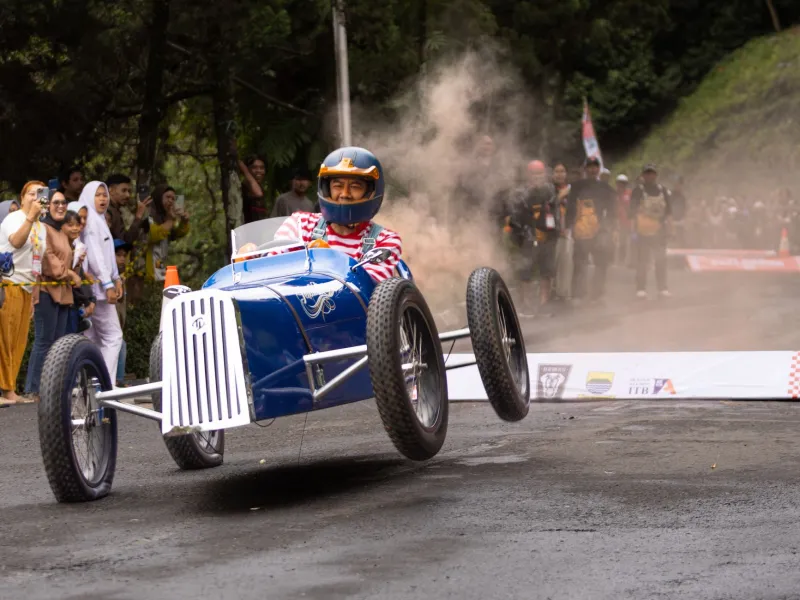
There’s a particular sound that tells you a soapbox derby is about to begin. It’s not an engine. It’s the clatter of a shopping trolley wheel, the rip of gaffer tape, and a distant shout of “has anyone seen the brake?” That’s the moment a closed residential street or a sloping park path stops being ordinary tarmac and becomes a free grandstand for anyone with a deckchair and a spare afternoon.
Soapbox racing is having a moment. Not the corporate kind with branded hospitality tents and a PA system you can hear from space. The proper kind: volunteer-run, slightly chaotic, and free to watch. In 2026, these events are popping up from Cornish hills to Scottish parks, usually tied to a summer fete, a village carnival or a town centre regeneration weekend. And they are, without doubt, the most gloriously unserious Sunday out in Britain.
It Starts With a Skip and a Dream
Every soapbox cart begins life as a pile of things that should probably be in a skip. A wooden pallet. A set of pram wheels. Half a mountain bike. A washing-up bowl for a seat. The teams — and they are teams, often families, scout groups, Men’s Sheds, pub quiz rivals or workmates who’ve taken the banter too far — spend weeks turning that pile into something that looks fast and is almost certainly not.
What makes it brilliant is that nobody is pretending this is Formula One. The aerodynamics are questionable. The steering is often a rope. The brakes are a hope and a prayer. But the pride is real. You’ll see carts themed as shark fins, camper vans, space rockets and, one memorable year, a full English breakfast. The crowd doesn’t care about lap times. They care about whether the thing makes it down the hill without shedding a wheel.
Scrutineering Is the Warm-Up Act
Before anyone races, there’s scrutineering. It sounds official. It is not. A volunteer with a clipboard — usually a retired engineer, a bemused councillor or someone’s dad in a high-vis — gives each cart a once-over. Brakes? Sort of. Steering? In theory. Helmet? Yes. Sense of humour? Essential.
This is where the crowd gathers first. Kids peer at the carts. Parents swap “rather you than me” looks. Teams bicker gently over whether the back axle is straight. And the officials, bless them, try to impose order on a queue of homemade vehicles that look like they’ve escaped from a cartoon. It’s the warm-up act, and it’s free. No ticket, no wristband, no bag check. Just stand near the start line and enjoy the show.
The Hill Is the Main Character
Once the racing starts, the hill takes over. Some courses are proper steep — the kind that makes you hold your breath as a cart wobbles into view. Others are gently sloping park paths where the real challenge is not clipping the bunting. Either way, the geography does the drama. You can watch from the pavement, a grassy bank, a front garden, or the back of a mate’s van if you’re lucky.
And the noise. Oh, the noise. Every cart gets a cheer. The fast ones get gasps. The wobbly ones get laughter. The ones that veer slightly off course get a collective “ooooh” that sounds like a Cup final replay. Nobody is checking their phone. Nobody is queueing for a £7 hot dog. They’re just watching gravity do its thing, together.
Why It Feels More Like Football Than Motorsport
Paid motorsport is brilliant, but it’s a different universe. Grandstands, ear defenders, corporate logos, a schedule that runs to the minute. Soapbox derby is the opposite. It’s grassroots fan culture in its purest form: local rivalries, homemade banners, a raffle, a burger van doing a roaring trade, and a commentator who knows everyone’s nickname.
It feels closer to Sunday league football than Silverstone. The same people turn up year after year. The same team brings the same ridiculous cart and swears they’ve fixed the brakes this time. The same aunty shouts “mind the kerb!” at every single run. You don’t need to know the rules. You don’t need to pick a side. You just need to stand there and enjoy the glorious, slightly dangerous daftness of it all.
How to Find a 2026 Race Day Near You
Finding one takes a bit of local digging, which is half the fun. Start with your council’s road closure notices — soapbox derbies need a closed street, and those notices are public. Then check local Facebook groups, community noticeboards, library posters, town hall what’s-on pages and the websites of rotary clubs, round tables and village halls. Search for “soapbox derby 2026” plus your town or county, but don’t stop there. Many events are listed as “gravity race”, “cartie race” or “box cart derby”.
Ask at the pub. Ask at the barbers. Ask the person organising the summer fete. These events are volunteer-run and often advertised by word of mouth. If you find one, put the date in your diary and tell a friend. That’s how these things survive.
What to Bring (and What Not To)
Bring a folding chair or a blanket, because standing on a slope for three hours is a young person’s game. Bring cash for the cake stall and the raffle. Bring a flask, because British weather. Bring kids if you’ve got them — they’ll love it — but keep them behind the barrier, not on the course. And bring patience for the inevitable delay when a cart needs a mid-race repair with a zip tie and a prayer.
Don’t bring your best shoes. The grass will be muddy. Don’t bring a drone unless you’ve checked the rules. And don’t expect a precise timetable. Soapbox time is elastic. The first cart might go at 11am. It might go at 11.40. Nobody knows. That’s part of the charm.
The Finish Line Is a Feeling
The finish line is usually a chalk line, a bit of tape or a volunteer with a flag. The carts cross it at wildly different speeds. Some roll gently. Some arrive sideways. Some don’t arrive at all and have to be towed. But the cheer is the same. Because by the time the last cart has gone down, you’ve spent a free afternoon outdoors, surrounded by people who made something silly and shared it with strangers.
That’s the real prize. Not a trophy. Not a sponsorship deal. Just a closed street, a sloping park, a deckchair and the feeling that you’ve been part of something local. In 2026, with everything costing more, that’s worth more than a theme park ticket. And you don’t even have to queue.